All Categories
Featured
Table of Contents
Management in Innovation & Innovation" uses a blueprint for foundational, high-priority actions that will strengthen U.S. innovation leadership."To stay the global leader in innovation, the United States need to continue to cultivate an environment where bold concepts can grow,". "We value the Trump Administration's acknowledgment that innovative technologies, including AI, are vital to maintaining U.S.
competitiveness in emerging technologies. Organization Roundtable urges Congress and the Administration to develop on our existing strengths and champion pro-growth policies that underpin an economic ecosystem that supports and rewards innovation."Specifically, Organization Roundtable advises policymakers to advance a number of crucial priorities, consisting of: Reinforcing federal R&D abilities; Helping with increased private sector R&D; Making strategic investments to protect supply chains critical for innovation; Updating and broadening necessary innovation-related infrastructure; Establishing clear and constant structures for innovation development and use; Establishing and promoting for risk-based innovation standards that are lined up with U.S.
Research and advancement (R&D) organizations are engines of modification, but they are still vulnerable to disturbance. Tightening up budgets and fast-moving demand signals are complicating the work of R&D companies across government and personal industry. Toffler Associates' experience as tactical consultant to significant labs, tech accelerators, and other websites of R&D has yielded insights into how these companies can successfully define their function, engage their customers, and deliver on their mission.
Consumer innovation companies such as Meta and Alphabet, for example, invested the previous year reducing speculative bets on the development of brand-new innovations in favor of fortifying balance sheets and providing revenues. On the federal government side, the Department of Defense (DoD) asked for 3.4% less financing for science and technology activities in FY2024.
Primary Impact of Modern Innovation Centers
Toffler Associates observes two challenges in our customers' R&D organizations: Demonstrating and interacting worth; and Establishing long-term plans that are durable to surprise. Effective R&D companies establish techniques to communicate the effect of their work, tighten up the scope of their objective, and prepare for a variety of possible future situations.
All R&D has the objective of delivering worth to downstream stakeholders: those who will be accountable for structure, using, or offering the product of the R&D organization's work. The R&D company can optimize their impact by thoroughly mapping that group of stakeholders, comprehending their needs, and aligning R&D efforts to produce items likely to be successfully transitioned by clients.
Variety in speculative investment can help hedge against technological surprise, and the science and engineering workforce is best placed to evaluate the likely return on various research paths. It does suggest including downstream stakeholders commercial engineers, sales and marketing, warfighters previously in the development procedure. By getting and acting upon early feedback on how an item might be made, offered, and utilized, R&D groups can ensure that their products fix issues and develop relationships of trust.
Cloud-Based Infrastructure for Advanced Tech Projects
Specifically in government, lots of R&D organizations are separated from their clients by geography, administration, and culture. To construct this kind of meaningful relationship, R&D organizations need to convene stakeholder groups that may not understand each other's rewards and restrictions. In large companies like the Department of Defense, R&D groups and their customers might have a difficult time finding each other in the very first location.
Proactive Defense Strategies for Decentralized Corporate Research Projects
The more mystical the issue set or the service space, the more difficult the difficulty. Soldiers, for example, can struggle to make clear to researchers the reality of the battleground environment, and scientists can struggle in turn to discuss the capabilities and limitations of expert system or quantum sensing. The ability to listen, observe, and intuit the issues dealt with by clients is important for R&D organizations to cultivate.
There are tools that can help: R&D organizations can develop a to clearly specify all key stakeholders, including customers, governing authorities, and sources of skill and resources. An builds on the stakeholder map with a clear prioritization of stakeholder needs and a method to involving them throughout the R&D procedure to confirm solutions.
A can assist R&D companies be intentional about how they will engage their stakeholders. This must be as comprehensive and tactical as possible, with formats, design templates, and schedules. A comprehensive strategy can get rid of the uncertainty, leaving more time for science and engineering. These activities might even help the R&D organization find that its lines of effort currently line up to stakeholder needs except that without interaction, the value is not understood by either party.
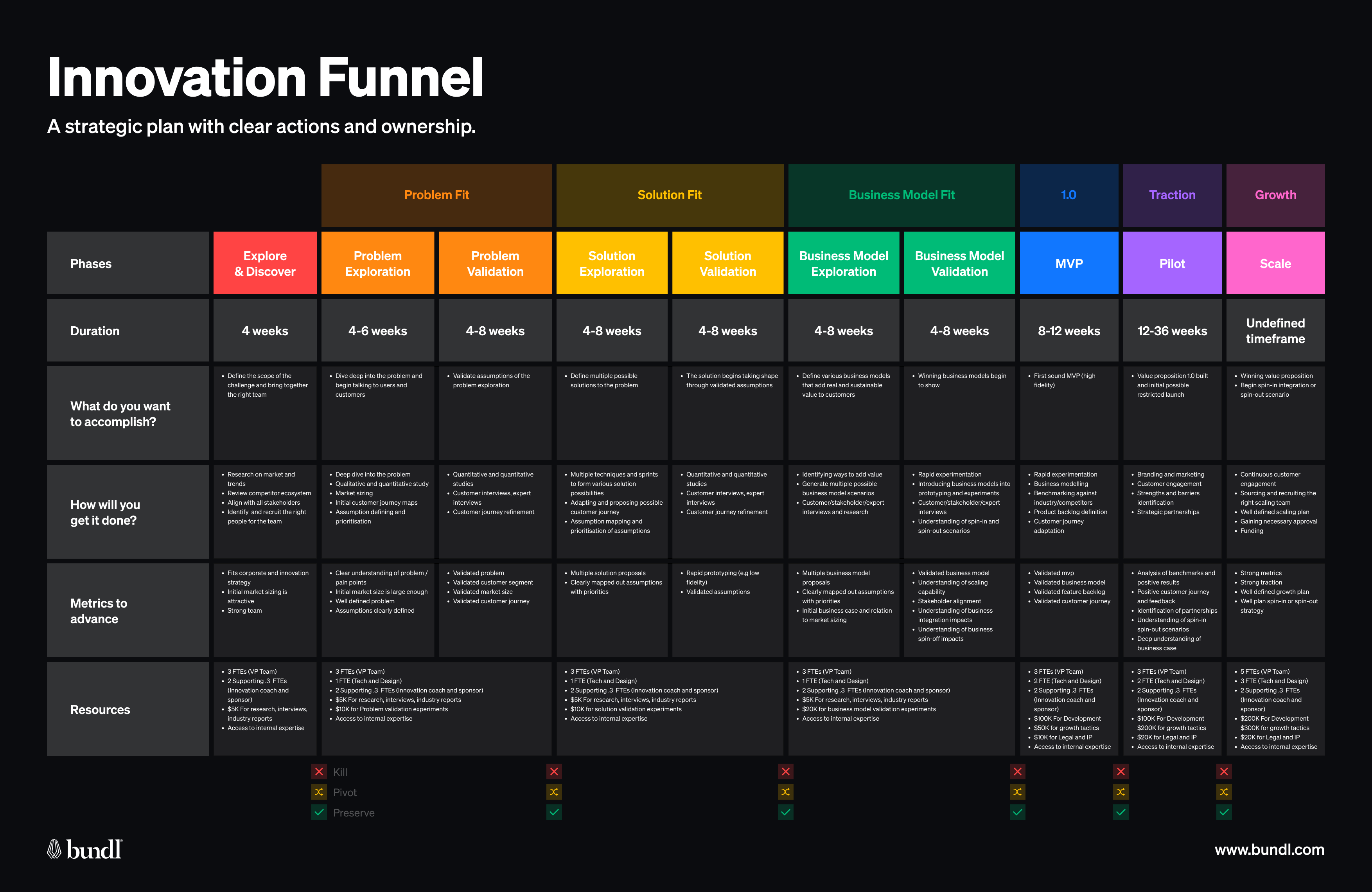
In theory, by offering worth to downstream stakeholders, the R&D organization can satisfy the interests of upstream stakeholders too, consisting of executives, oversight authorities, and shareholders. Reality is a little bit more complex. In government, for instance, the R&D organization might be bound by law and policy to leadership and oversight throughout agencies and branches of government, and these stakeholders might have various meanings of success.

Latest Posts
Scaling Cloud-Native Smart Hubs for 2026
How Enterprise R&D Labs Sustain Transformation
Building High-Performance Innovation Hubs in 2026